
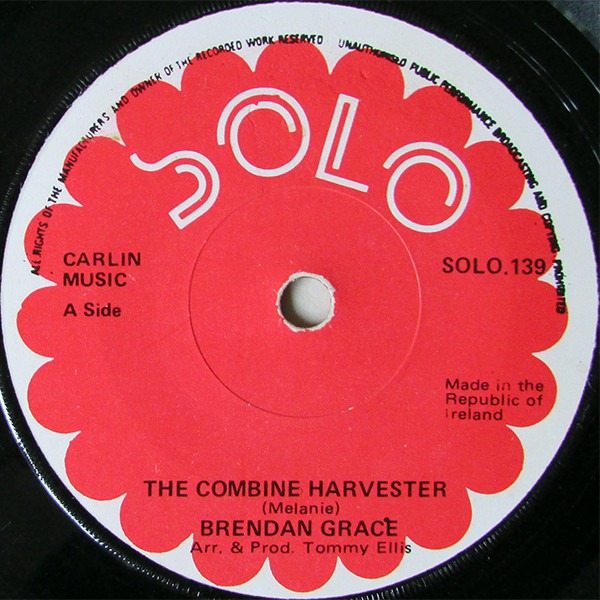
Memories: The Irish Combine Harvester (Song)

From Dublin Wit to Somerset Soil: How a Parody Masterpiece Reclaimed the Meaning of a Summer Anthem

Fifty years ago, a brilliant fusion of American folk-pop melody, sharp Irish songwriting, and Somerset ‘Scrumpy and Western’ charm combined to create one of the most enduring novelty hits in broadcasting history. This is the expansive story of “Combine Harvester”—a track that didn’t just conquer the airwaves of June 1976, but traced its creative roots through an Irish chart-topper by Brendan Grace, a clever pen owned by composer Brendan O’Shaughnessy, and the whimsical American foundations laid down by Melanie Safka.

In June 1976, the United Kingdom was in the absolute grip of a historic, record-breaking summer heatwave. As temperatures soared above 30°C day after day, the national airwaves were dominated by an equally surreal cultural phenomenon: a group of Somerset musicians singing in thick, exaggerated West Country accents about agricultural romance. On June 12, 1976, The Wurzels’ “Combine Harvester (Brand New Key)” officially hit Number 1 on the UK Singles Chart, dislodging no less an entry than J.J. Barrie’s “No Charge.”

To the casual listener buying the 7-inch single on the EMI label that summer, it felt like a uniquely English slice of rural comedy. But beneath the tractor grease and hay bales lay a rich, transatlantic lineage that began with a female pop pioneer in the United States and found its comedic voice on the streets of Dublin, Ireland.

The Musical Lineage: Roller Skates to Tractors

The unmistakable melody of “Combine Harvester” was originally written by American singer-songwriter Melanie Safka. In 1971, she released “Brand New Key” (often remembered as “The Roller Skate Song”). Safka’s original track was a whimsical, innocent-sounding folk-pop tune about a girl who had a brand-new pair of roller skates looking for a boy with the corresponding key to lock them. It became a global powerhouse, reaching Number 1 on the US Billboard Hot 100 and charting heavily in the UK and Ireland.

Fast forward to 1975, when talented Irish composer and songwriter Brendan O’Shaughnessy recognized the inherent comedic potential in Safka’s bouncy rhythm. O’Shaughnessy brilliantly flipped the script: he swapped the urban roller skates for a heavy-duty piece of farm machinery and twisted the innocent romantic courtship into an explicitly transaction-focused marriage proposal centered around adjoining farmland.

The song was initially given to legendary Irish comedian and singer Brendan Grace. Released in Ireland in late 1975, Grace’s version—fueled by O’Shaughnessy’s witty lyrics—became an absolute runaway success, climbing directly to Number 1 on the Irish Singles Chart. Seeing the phenomenal success across the Irish Sea, the legendary West Country producer Bob Barratt realized the track could be perfectly tailored for a group of Somerset farm-rockers who had been pioneering the “Scrumpy and Western” sub-genre: The Wurzels.

The Anatomy of the Record: Musicians & Credits

When The Wurzels entered the studio to cut their version for the album The Combine Harvester, they leaned heavily into the style established by their late founder, Adge Cutler. The lineup credited on the original 1976 EMI/One Up liner notes featured a tightly knit acoustic ensemble:

  • Tommy Banner: Accordion and vocals
  • Tony Baylis: Bass, sousaphone, and vocals
  • Pete Budd: Banjo, lead vocals, and guitar

Budd’s jaunty, rural delivery of O’Shaughnessy’s lyrics gave the track its definitive UK character. The track takes the core structure of Safka’s original melody but dresses it up with rustic acoustic instrumentation, creating a dense, driving rhythm that felt thoroughly handmade.

Critical Reception & Industry Sales Data

The music press in June 1976 treated the release with the exact mix of bewilderment and begrudging admiration that accompanies all great novelty breakthroughs. NME and Melody Maker journalists, who were concurrently trying to make sense of the burgeoning, aggressive punk rock movement in London’s underground clubs, noted the pure, inescapable escapism of the record. One reviewer famously muttered that the song was “perfectly calibrated to rot the brains of a nation suffering from heatstroke.” Yet, its infectiousness was undeniable.

The British public agreed, buying the physical single in droves.

  • Chart Run: After hitting Number 1 on June 12, 1976, it held the top spot for two solid weeks before being replaced by The Real Thing’s “You to Me Are Everything.”
  • Sales Certification: The record quickly shifted hundreds of thousands of copies, earning an official Gold Certification from the British Phonographic Industry (BPI)—an immense feat for a comedic parody.
  • The Release Timeline: This single served as a crucial transition point. It was preceded by their localized 1975 single “I Am A Cider Drinker” (which would find its own success later in the year as a follow-up) and was succeeded on the release slate by “The Blackbird” later in 1976.

In the Eye of the World: Summer 1976

The sheer absurdity of “Combine Harvester” provided a welcome distraction from a remarkably tense global landscape. While families listened to The Wurzels on their transistor radios, the world around them was experiencing seismic changes:

  • The Great Drought: Nationally, the UK was undergoing its driest summer in over two centuries, leading to the appointment of a dedicated “Minister for Drought” and widespread water rationing.
  • Global Politics: In June 1976, the Soweto Uprising began in South Africa, marking a tragic and pivotal turning point in the struggle against apartheid.
  • Technology & Culture: In the United States, a brand-new electronics company called Apple Computer Company was freshly incorporated by Steve Jobs and Steve Wozniak, quietly laying the groundwork for the modern digital age.

Lyrical Meaning: An Agricultural Pre-Nup

On its surface, “Combine Harvester” is a simple, slapstick song about a farmer attempting to woo a neighbor. However, a closer look at O’Shaughnessy’s lyrics reveals a hilarious, completely unromantic satire of traditional rural marriages of convenience.

Cuz I got a brand new combine harvester

An’ I’ll give you the key

Come on now let’s get together in perfect harmony

I got twenty acres, an’ you got forty-three

Now I got a brand new combine harvester an’ I’ll give you the key

The humor derives entirely from the protagonist’s transparent motives. He isn’t wooing his love interest with poetry or flowers; he is wooing her with heavy machinery and a clear eye on real estate expansion. The fact that she owns “forty-three” acres to his “twenty” makes it abundantly clear who is truly benefiting from this “perfect harmony.” It turns the classic pop love song into an overt, hilarious asset merger.

Desert Island Discs & Retro Accolades

Despite its status as a novelty tune, the track has aged into a beloved pop artifact. While it rarely graces the serious, moody album-oriented “Top 100” lists of high-brow music publications, it consistently finds its place in the Hall of Fame for British comedy records, frequently cited alongside tracks like “Lily the Pink” and “Grandad.”

The track made a high-profile, legendary appearance on BBC Radio 4’s prestigious Desert Island Discs. On November 23, 2007, celebrated British comic actor and writer David Walliams (famed for Little Britain) appeared as the castaway. When tasked with selecting the eight recordings that defined his life and would keep him company in isolation, Walliams proudly selected The Wurzels’ “Combine Harvester,” cementing the song’s status as a foundational piece of eccentric British identity.

The track has seen various archival reissues via EMI’s specialized gold-standard retrospective formats and budget pressings over the years, ensuring that every new generation of cider enthusiasts can access its pristine, analog masters. It remains a joyous monument to a time when music didn’t take itself too seriously, and a rural parody could unite listeners across two islands.

External Archives & Media

To explore the visual design and physical footprint of this summer anthem, visit the verified archives below:

Rediscover the wonderful, sun-drenched nostalgic energy of the track by watching the performance archive on YouTube, or add the beautifully restored version to your playlist directly on Spotify.

Article written with the great assistance of Artificial Intelligence & Human Memory which can contain errors. Errors have been checked but if you spot something wrong contact us.
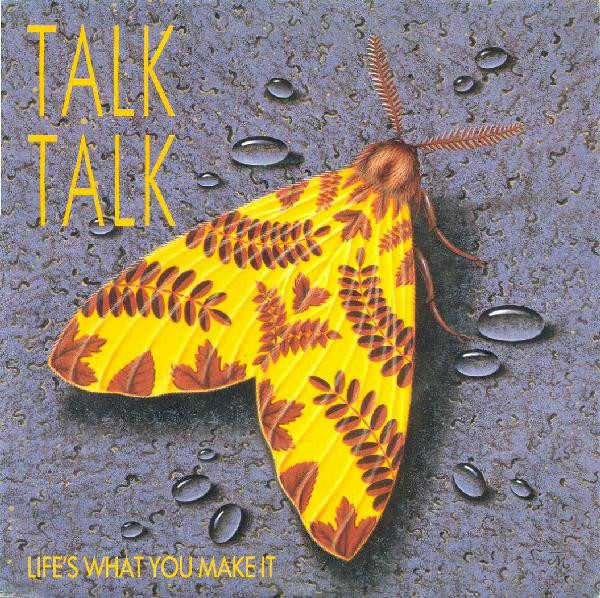
Radio Memory: Life’s What You Make It

A Masterpiece of Restraint: Why Talk Talk’s ‘Life’s What You Make It’ Remains an Untouchable Monument of Pop Evolution

Decades before the music world fully understood the radical genius of Mark Hollis, a singular, pulsing piano riff and a minimalist drum groove emerged from the UK winter of 1986 to redefine the boundaries of art-pop. This is the story of “Life’s What You Make It”—a track born from the stubborn refusal of commercial formulas, which ultimately earned its permanent entry into the hall of musical immortality.

In the hyper-polished, synthesized landscape of the mid-1980s, pop music was largely defined by excess. But on January 6th, 1986, the English band Talk Talk released a lead single that flew directly in the face of the era’s maximalism. “Life’s What You Make It” didn’t rely on synthetic sheen or explosive choruses; instead, it leaned into an intoxicating, repetitive, and deeply organic groove. Front man and primary songwriter Mark Hollis, alongside producer Tim Friese-Greene, crafted a track that acted as the ultimate bridge between their early synth-pop origins and the abstract, ambient post-rock masterpieces (Spirit of Eden and Laughing Stock) that would follow. Today, it stands not just as a hit from a bygone era, but as an essential, foundational monument of alternative music.

The Anatomy of a Masterpiece: The Liner Notes

To understand the magic of “Life’s What You Make It,” one must look at the exceptional cast of musicians assembled in the studio, as immortalized on the liner notes of its parent album, The Colour of Spring.

While Talk Talk was officially a trio comprised of Mark Hollis (vocals), Paul Webb (bass), and Lee Harris (drums), the recording session invited elite outside talent to shape the sonic landscape. The song’s driving, gritty guitar work was handled by legendary session musician David Rhodes, famed for his extensive work with Peter Gabriel. The iconic, rolling piano motif—which Hollis admitted was inspired by the rhythmic drive of Miles Davis—was brilliantly textured by Tim Friese-Greene. Meanwhile, the track features subtle, organic percussion additions from Martin Ditcham, adding an intricate, living breathing pulse underneath the main rhythm.

What makes the performance so staggering is its structural reliance on loop-like repetition before digital sampling became a dominant industry norm. The song takes a strict two-bar bass figure and repeats it relentlessly throughout the track, allowing shifting layers of guitar grit, organ swells, and Hollis’s vulnerable, smoky vocals to build changing textures around it.

Critical Reception & Chart Triumph

Upon its release by EMI/Parlophone, the music press at the time reacted with a mixture of surprise and profound fascination. Having previously pegged Talk Talk as mere contemporaries of New Romantic synth bands like Duran Duran, critics were forced to reckon with an entirely different animal. The music press praised the track’s spatial awareness, noting how the band used silence and restraint as instruments in their own right. It was immediately clear that Talk Talk was moving toward an art-rock paradigm shift.

Audiences responded in kind. “Life’s What You Make It” became a major international hit.

  • Chart Positions: The single climbed to Number 16 on the UK Singles Chart, while cracking the Top 20 across various European territories (including Germany and the Netherlands) and making a significant dent on the US Billboard Hot 100.
  • Industry Sales Data: The single’s steady sales earned it a Silver certification by the British Phonographic Industry (BPI) in the UK, recognizing over 250,000 copies sold, a testament to its commercial viability despite its avant-garde leanings.
  • The Release Timeline: Positioned perfectly in the band’s discography, the single was preceded by the 1984 synth-heavy hit “Such a Shame” (from It’s My Life) and was followed by the lush, sweeping ballad “Living in Another World” later in 1986.
[Synth-Pop Era]          [Art-Pop Transition]             [Post-Rock Era]
"Such a Shame" (84)=>"Life's What You Make It"(86)=>"Living in Another World" (86)

In the Eye of the World: 1986

The track’s defiant, celebratory message arrived at a turbulent historical juncture. As the needle dropped on “Life’s What You Make It” in early 1986, the world was shifting beneath the public’s feet. Locally in the UK, the nation was grappling with the aftermath of the bitter miners’ strikes and the economic upheavals of the Thatcher era. Globally, just weeks after the song’s release, the world would witness the tragic Space Shuttle Challenger disaster, followed closely in April by the Chernobyl nuclear catastrophe.

In a world gripped by the anxiety of the Cold War and sudden disasters, Hollis’s lyrical message offered an essential, unvarnished antidote.

Lyrical Meaning: An Anti-Defeatist Anthem

Unlike the melancholic, existential dread that characterized much of the 80’s post-punk and wave scenes, “Life’s What You Make It” is a fiercely optimistic, anti-defeatist anthem. Mark Hollis wrote the lyrics as a direct reaction to people who gave up on life in the face of hardship.

The lyrics are sparse, repetitive, and striking:

Baby, life’s what you make it

Celebrate it, anticipate it, yesterday’s faded

Nothing can change it

Life’s what you make it

Hollis’s delivery turns these simple phrases into a mantra. It is a philosophy that acknowledges that while we cannot change the past (“yesterday’s faded”), our perception and proactive embrace of the present (“celebrate it”) dictates our reality. It was a call to human agency, delivered not with naive cheerfulness, but with the grit and gravity of someone who knew that choosing joy is a deliberate, difficult act of defiance.

Legacy, Reissues, and the Hall of Fame

The song’s inclusion in prestigious top 100 lists over the decades—such as Pitchfork‘s retrospective lists of the best 1980s tracks and various “Greatest Songs of All Time” features in Q Magazine and Mojo—affirms its legendary status.

It has also become a holy grail for audiophiles. The track has seen numerous high-profile reissues, most notably the 2012 heavyweight vinyl reissue of The Colour of Spring, which included a bonus DVD featuring a pristine high-definition audio mix. The song has also been famously covered by artists ranging from Weezer to Placebo, cementing its cross-generational influence.

Furthermore, the song’s enduring cultural footprint is felt on the airwaves of BBC Radio 4. While Mark Hollis himself famously retreated from the public eye and never appeared as a castaway on Desert Island Discs, “Life’s What You Make It” has been selected by multiple distinguished castaways over the years as one of their eight essential tracks to take to an isolated island—chosen precisely for its comforting, rhythmic resilience and life-affirming message.

Ultimately, “Life’s What You Make It” remains an untouchable triumph. It proved that pop music could be deeply artistic, fiercely experimental, and universally catchy all at once. It is a song that demands to be remembered, celebrated, and played loud.

External Archives & Media

To dive deeper into the history, artwork, and physical releases of this classic track, explore the official archives below:

Experience the visual genius of the song’s famous, nocturnal nature-themed music video on YouTube, or stream the immaculate studio recording directly on Spotify.

Article written with the great assistance of Artificial Intelligence which can create errors. Errors have been checked but if you spot something wrong contact us.
Podcast Review: The Irish History Show

The Irish History Show stands as a masterclass in historical broadcasting, offering a level of rigor and nuance that sets the standard for the genre. Far from a surface-level summary of famous dates, it operates as a deeply researched, academic-yet-accessible archive of Ireland’s past.

RSS: http://irishhistoryshow.ie/feed/podcast

Website: http://irishhistoryshow.ie

Player: https://radio.ie/play/?id=535763

The Presenters

The show’s enduring quality is anchored by its presenters and producers, Cathal Brennan and John Dorney. Having steered the program for over a decade—originating on the community airwaves of Near FM before expanding its digital footprint—they bring a veteran broadcasting sensibility to every episode.

Surpassing the 100-episode milestone is a rare feat in podcasting, and their longevity translates into a steady, lived-in dynamic. They aren’t just reading scripts; they are researchers and historians who know how to interview experts, guiding complex conversations with a relaxed but highly informed authority.

Uncompromising Content Depth

Where the podcast truly separates itself is in its formidable depth. Brennan and Dorney refuse to talk down to their audience, frequently diving into the granular mechanics of history rather than just the headlines.

Instead of merely recounting the timeline of the revolutionary period, they examine the intricate socio-political machinery underneath—from the 1922 Postal Strike and the nuances of early Dublin local government, to complex historiographical debates like the “History Wars” and revisionism.

  • Expert Analysis: The presenters consistently bring on heavy-hitting academics and authors—such as Dr. Brian Hanley discussing the Arms Crisis or Eunan Ó Halpin examining the fatalities of the revolutionary era—ensuring the discourse is rooted in primary research rather than popular myth.
  • Thematic Range: While the show provides definitive coverage of the Decade of Centenaries and the Civil War, it actively broadens its lens to cover diverse topics, from the localized impact of the Spanish Flu to practical deep dives into Irish genealogy.

Ultimately, The Irish History Show rewards listeners who want to move beyond the tourist-level narrative of Irish history and explore the complex, unvarnished realities of the past.

Podcast Review: The Trawl

The Trawl is an absolute triumph, offering a laugh-out-loud sanctuary from the exhausting chaos of modern politics. Each week, hosts Jemma Forte and Marina Purkiss dive headfirst into the swamp of social media so you don’t have to. They expertly curate the most viral tweets, jaw-dropping headlines, and unhinged internet soundbites with razor-sharp wit.

Beneath the engaging humor and digital deep-dives lies a fierce, righteous political critique that pulls absolutely no punches. Proudly and unapologetically left-leaning, the show serves as a brilliant takedown of right-wing hypocrisy and media spin.

The true magic of the podcast, however, rests entirely on the remarkable talent and dynamic energy of its two presenters. Jemma and Marina share an effortless, sparkling chemistry that makes every episode feel like a vibrant, unfiltered chat with your smartest friends. Their authentic bond perfectly balances the heavy, rage-inducing news cycle with infectious warmth and genuine hilarity. Together, they seamlessly transform doom-scrolling and political despair into an entertaining, empowering, and cathartic listening experience.

If you need to make sense of a turbulent world without losing your mind or your sense of humor, The Trawl is simply essential listening.

RSS feed: https://feeds.acast.com/public/shows/68a837db718453410e2b6f06

YouTube: https://www.youtube.com/@TheTrawl/videos

Player: https://radio.ie/play/?id=535692

Support: https://www.patreon.com/thetrawlpodcast/about

Back to square one – World Cup 2026 on radio

FIFA World Cup 2026 – Group Stages & Radio Broadcasters

FIFA World Cup 2026™

Group Stages, Matchday 1 Host Cities & Official Radio Broadcasters

Country Round 1 Host City Radio Broadcaster (Rights) Availability
Group A
🇲🇽 Mexico Mexico City W Radio / Televisa Geo-Blocked
🇿🇦 South Africa Mexico City SABC Radio Geo-Blocked
🇰🇷 South Korea Guadalajara KBS Radio Geo-Blocked
🇨🇿 Czech Republic Guadalajara Český rozhlas Global Broadcast
Group B
🇨🇦 Canada Toronto TSN Radio Geo-Blocked
🇧🇦 Bosnia & Herzegovina Toronto BHRT Radio Geo-Blocked
🇶🇦 Qatar San Francisco Bay Area beIN Sports Audio Geo-Blocked
🇨🇭 Switzerland San Francisco Bay Area SRF 3 Geo-Blocked
Group C
🇧🇷 Brazil New York / New Jersey Rádio Globo Geo-Blocked
🇲🇦 Morocco New York / New Jersey SNRT Radio Global Broadcast
🇭🇹 Haiti Boston Radio Télévision Nationale Global Broadcast
🏴󠁧󠁢󠁳󠁣󠁴󠁿 Scotland Boston BBC Radio Scotland Geo-Blocked
Group D
🇺🇸 United States Los Angeles Futbol de Primera (ES) Geo-Blocked
🇵🇾 Paraguay Los Angeles Radio Nacional del Paraguay Global Broadcast
🇦🇺 Australia Vancouver SBS Audio Geo-Blocked
🇹🇷 Türkiye Vancouver TRT Radyo 1 Global Broadcast
Group E
🇩🇪 Germany Houston ARD Audiothek (Sportschau) Geo-Blocked
🇨🇼 Curaçao Houston Radio Hoyer Global Broadcast
🇨🇮 Ivory Coast Philadelphia Radio Côte d’Ivoire Geo-Blocked
🇪🇨 Ecuador Philadelphia Radio La Red Global Broadcast
Group F
🇳🇱 Netherlands Dallas NPO Radio 1 Geo-Blocked
🇯🇵 Japan Dallas NHK Radio 1 Geo-Blocked
🇸🇪 Sweden Monterrey Sveriges Radio Geo-Blocked
🇹🇳 Tunisia Monterrey Radio Tunisienne Global Broadcast
Group G
🇧🇪 Belgium Seattle RTBF / VRT Geo-Blocked
🇪🇬 Egypt Seattle ERTU Radio Geo-Blocked
🇮🇷 Iran Los Angeles IRIB Radio Varzesh Global Broadcast
🇳🇿 New Zealand Los Angeles SENZ Radio Geo-Blocked
Group H
🇪🇸 Spain Atlanta RNE / RTVE Audio Global Broadcast
🇨🇻 Cape Verde Atlanta RTC Radio Global Broadcast
🇸🇦 Saudi Arabia Miami SBC Radio Geo-Blocked
🇺🇾 Uruguay Miami Radio Oriental (CX12) Global Broadcast
Group I
🇫🇷 France New York / New Jersey RMC Sport Geo-Blocked
🇸🇳 Senegal New York / New Jersey RTS Radio Global Broadcast
🇮🇶 Iraq Boston IMN Radio Global Broadcast
🇳🇴 Norway Boston NRK Radio Geo-Blocked
Group J
🇦🇷 Argentina Kansas City Radio Nacional Geo-Blocked
🇩🇿 Algeria Kansas City Radio Algérienne Global Broadcast
🇦🇹 Austria San Francisco Bay Area ORF (Ö3) Geo-Blocked
🇯🇴 Jordan San Francisco Bay Area JRTV Radio Global Broadcast
Group K
🇵🇹 Portugal Houston Antena 1 (RTP) Global Broadcast
🇨🇩 DR Congo Houston RTNC Radio Global Broadcast
🇺🇿 Uzbekistan Mexico City MTRK Geo-Blocked
🇨🇴 Colombia Mexico City Caracol Radio Global Broadcast
Group L
🏴󠁧󠁢󠁥󠁮󠁧󠁿 England Dallas talkSPORT / BBC Radio 5 Live Geo-Blocked
🇭🇷 Croatia Dallas HRT Radio Geo-Blocked
🇬🇭 Ghana Toronto GBC Radio Global Broadcast
🇵🇦 Panama Toronto RPC Radio Global Broadcast

[ai] While high-definition screens and stadium streams dominate the headlines for the FIFA World Cup 2026, the true heartbeat of the tournament’s global reach lies in a much more resilient medium: radio. Across 104 matches, three host nations, and vastly differing time zones, billions of fans won’t be watching the action—they will be feeling it through live audio commentary. From traditional AM/FM terrestrial transmitters piercing through remote terrain to high-fidelity digital web players streaming to smartphones, radio remains the most democratic and immediate way the world consumes the beautiful game.

The Unrivaled Reach of Live Audio Commentary

Radio broadcasting isn’t just a fallback for when a television screen isn’t nearby; it is a specialized art form. Where cameras capture the wide frame, a radio commentator must translate the tactical shifts, the kinetic energy of the crowd, and the precise trajectory of the ball into pure emotion. For millions of commuters, workers, and fans in areas where broadband infrastructure stalls, signal propagation via radio waves is the only thread connecting them to their national team.

As digital audio distribution scales to meet unprecedented demand, broadcasters are balancing classic over-the-air engineering with geo-unlocked streaming players to create a truly borderless stadium experience. Whether it is a local community station or a massive national network, the audio engineers behind the consoles are ensuring that when the first whistle blows in 2026, no one is left in silence.

However, the modern digital broadcasting landscape is heavily guarded by regional rights agreements, making geo-blocking a frustrating reality for the international fan. While massive networks secure lucrative, exclusive rights for their home nations—meaning an official radio stream perfectly clear in London might be blocked if you try to listen in Lima—the fragmentation of media rights has sparked a massive push for broader accessibility. While tech giants like YouTube are bridging the gap by offering global streams of the opening minutes of matches to bypass these digital borders, finding a completely unrestricted, full-match audio stream remains the ultimate prize for the traveling or displaced supporter seeking uninterrupted coverage.

When the live action concludes, the conversation immediately shifts to on-demand audio, cementing 2026 as the biggest World Cup in history for podcasting. Official audio partners, such as talkSPORT with their World Cup Daily and How To Win The World Cup series, are deploying huge rosters of legends and pundits to capture both the tactical nuances and the raw emotion of the North American fan zones. Alongside independent deep dives like The Road to World Cup 26 Podcast, this explosion of audio content serves as the narrative glue between matchdays. These podcasts ensure that long after the stadium lights dim in Mexico City or New York, the stories of the tournament continue to echo in the ears of fans worldwide.

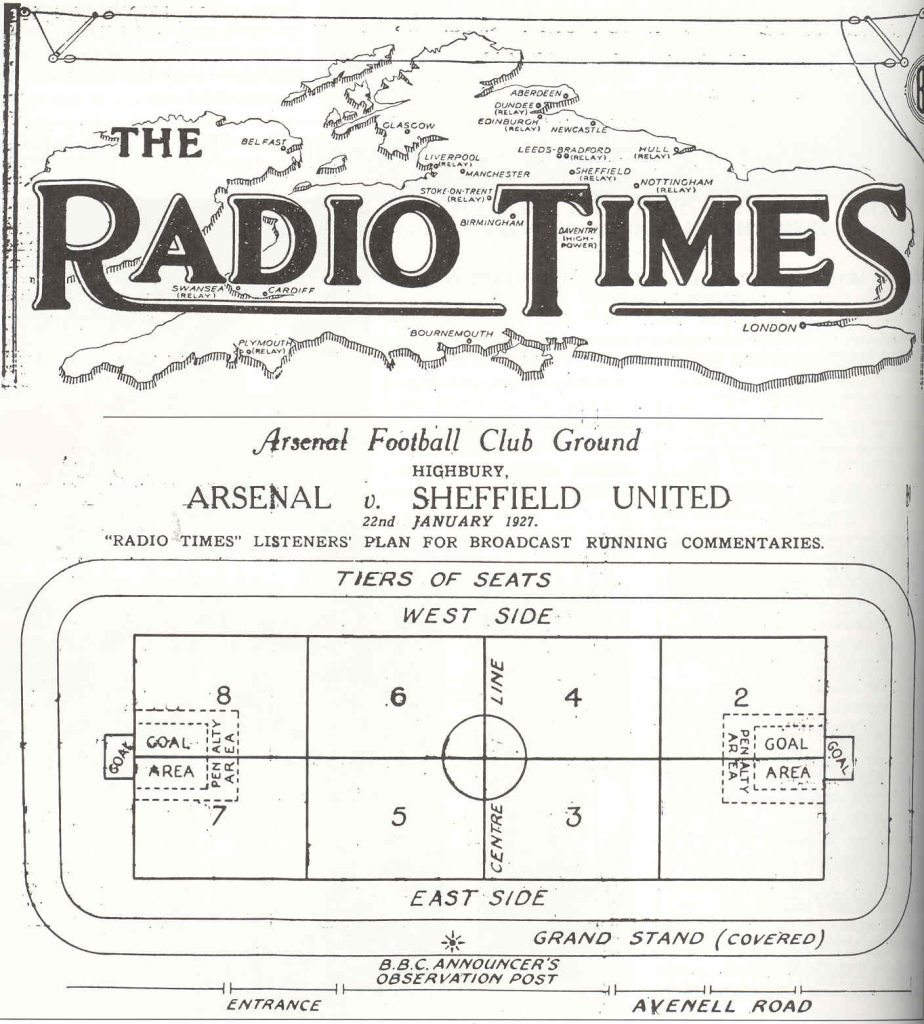
When Teddy Wakelam took his seat in the stands at Highbury in January 1927 to call an Arsenal versus Sheffield United match for the BBC, he effectively birthed the live soccer broadcast. To help audiences visualize the action, a local magazine printed a diagram of the pitch divided into eight numbered zones—a system that famously gave us the phrase “back to square one.” Nearly a century later, as the 2026 World Cup kicks off across North America, the underlying technology has evolved from static-filled AM transmitters to crystal-clear digital streams, yet the core magic remains entirely unchanged. In an era of screen fatigue, complex TV rights, and fragmented streaming subscriptions, radio endures because of its unparalleled intimacy and accessibility. One hundred years on, the theater of the mind is still the greatest stadium in the world, proving that you don’t need to see the ball to feel the absolute thrill of it hitting the back of the net.

The soccer in 1927 on the BBC wasn’t the first field sport radio broadcast in Europe. The first live commentary on a field sport in Europe was relayed from Croke Park on 29th August 1926. Ireland’s first radio station, 2RN, broadcast the All-Ireland hurling semi-final between Galway and Kilkenny with commentary by Paddy Mehigan.

And for the first world sports broadcast ever we can stay in Dublin. Marconi had been commissioned by the Dublin Daily Express to report the progress of the Kingston Regatta (July 20–22nd July 1898). He did this from a steam tug, sending ‘wireless’ messages back to the harbour where they were subsequently telephoned to Dublin. Becoming the world’s first ‘live’ transmission of a sporting event.

Unwind

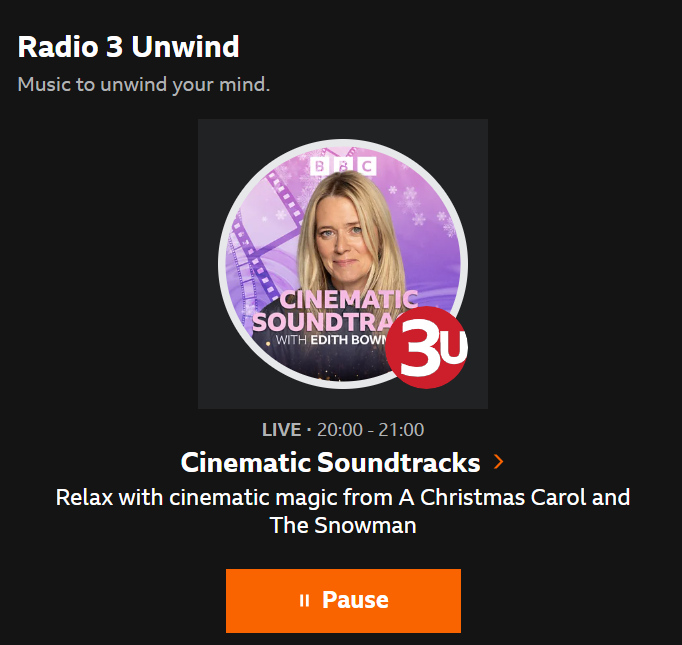
We all know about wind up radios. How about a radio channel to unwind to. I have become fond of popping on BBC Radio 3 Unwind to – unwind to. It is also available on BBC Sounds (UK only) and Radio.ie player here with 6 hours of rewind to unwind to.

South African radio can live stream on YouTube

a small update – of the 4 stations first listed here only one remains active at the same URL. The issue? YouTuble live links are not permalinks. This can be minimised by never sharing the destination URL at YouTube, share a link that you control as a forwarder, like a BitLY QR code link.